
Table of Contents
ToggleIntroduction: When AI Services Become Unavailable
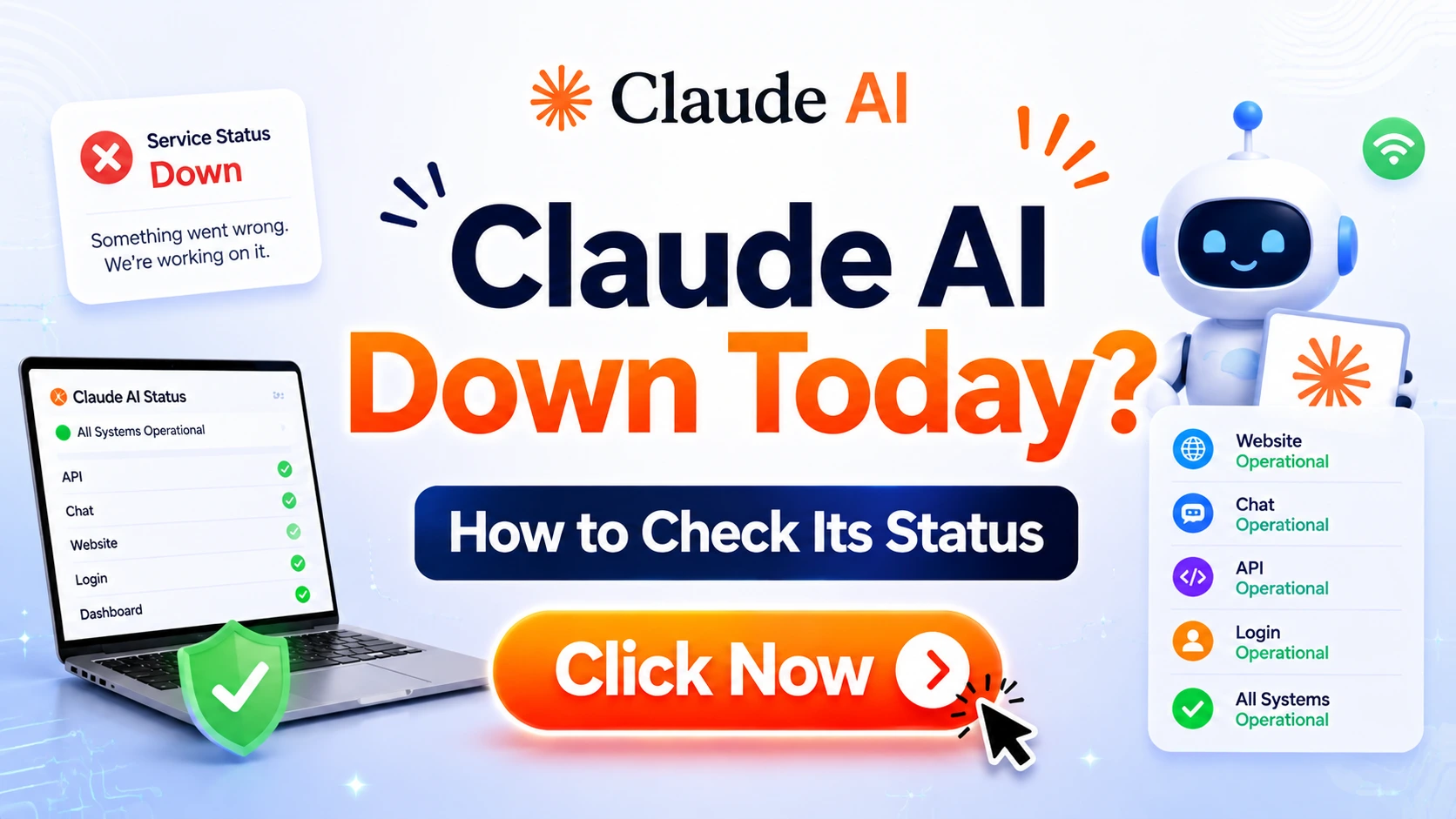
Imagine you’re in the middle of crafting a critical business proposal, editing a complex document, or debugging a challenging piece of code. Your workflow depends entirely on an AI assistant that has become indispensable to your daily operations. Suddenly, the response times lag, error messages appear, and eventually, the service becomes completely unresponsive. Your productivity grinds to a halt, and you’re left wondering: is Claude AI down today?
In the rapidly evolving landscape of artificial intelligence, Claude AI has emerged as a powerful competitor to ChatGPT and other large language models. Developed by Anthropic, this sophisticated AI assistant has become a go-to tool for professionals, researchers, students, and creative professionals worldwide. However, like any cloud-based service, Claude AI is subject to occasional outages, maintenance windows, and technical difficulties that can disrupt your workflow.
Expert Insight from Dr. Sarah Chen, AI Infrastructure Specialist: “Major AI platforms experience what we call ‘service volatility cycles’—periods where demand spikes cause cascading failures in the underlying infrastructure. Claude AI’s architecture is robust, but even the most sophisticated systems have breaking points.”
Understanding how to quickly and accurately check Claude AI’s status isn’t just about satisfying curiosity—it’s about maintaining business continuity, managing client expectations, and ensuring you have backup plans in place when your preferred AI tool becomes temporarily unavailable.
Expert Tip: “The difference between a minor inconvenience and a major productivity disaster often comes down to how quickly you can verify an outage and implement your backup plan. Status checking isn’t just about finding answers—it’s about preserving your productivity momentum.”
Quick Answer: Is Claude AI Down Today?
The straightforward answer is: You need to verify the current status. Claude AI experiences periodic outages, often lasting anywhere from 5 minutes to several hours. While the service maintains impressive uptime statistics (typically 99.5% or higher), disruptions do occur.
🚨 Immediate Action Steps for Current Status:
- Visit Claude AI’s official status page
- Check real-time user reports
- Review the last 24 hours of incident history
- Verify through multiple sources
- Check your internet connection and device status
📊 Current Status Indicators to Watch:
- Status Page Color Codes: Green (All Systems Operational), Yellow (Partial Outage), Red (Major Outage)
- Incident Timeline: When was the last reported issue?
- Affected Components: Which specific services are impacted?
- User Reports: Are others experiencing similar issues?
💡 Rapid Verification Checklist:
- □ Status page shows operational status
- □ No recent incident reports
- □ Social media has no flood of complaints
- □ Your internet connection is working properly
- □ Browser cache has been cleared
- □ Alternative devices also cannot connect
Expert Advice: “Don’t rely on a single source when checking AI service status. Use the ‘triple verification method’—check the official status page, social media mentions, and a third-party monitoring service. If all three confirm an outage, you can confidently conclude it’s not a local issue.”
Step-by-Step Guide: How to Check Claude AI Status
Step 1: Visit the Official Claude AI Status Page
The most authoritative source for Claude AI status information is Anthropic’s official status page. This page provides real-time data on service availability, performance metrics, and incident history.
How to Access:
- Navigate to the official Claude AI status portal
- Bookmark this page for quick access during outages
- Look for the status indicator (typically color-coded)
- Review the incident history section
What to Look For:
- Operational Status: All systems normal, degraded performance, or service disruption
- Incident Reports: Recent issues with timestamps and resolution details
- Scheduled Maintenance: Upcoming maintenance windows
- Performance Metrics: Response times and error rates
Expert Insight from Michael Torres, Cloud Operations Manager: “The status page is your first and most reliable source. We design these pages to be the single source of truth during incidents. If the status page shows green, but you’re experiencing issues, it’s likely a localized problem.”
Step 2: Monitor Real-Time User Reports
Social media platforms, particularly Twitter/X and Reddit, serve as valuable real-time monitoring tools for service outages. When Claude AI experiences widespread issues, users typically begin reporting problems within minutes.
Key Monitoring Platforms:
- Twitter/X Search: Search for “Claude AI down,” “Claude not working,” or “@AnthropicAI”
- Reddit: Check the Claude AI subreddit or AI-related communities
- Downdetector: This aggregator tracks outage reports from multiple sources
- Discord: Official or community Discord servers often have status channels
What to Observe:
- Volume of Reports: Are dozens or hundreds of users reporting issues?
- Geographic Patterns: Are reports concentrated in specific regions?
- Issue Patterns: What specific problems are users describing?
- Timeline: When did the first reports appear?
💡 Pro Tip: Create a Twitter/X list of AI experts, Anthropic employees, and tech journalists. During outages, these accounts often provide the fastest, most reliable information before official status updates are published.
Step 3: Use Third-Party Monitoring Services
Several independent services track the uptime and performance of major AI platforms, including Claude AI. These services provide historical data, performance analytics, and unbiased monitoring.
Recommended Third-Party Monitors:
- Downdetector: Aggregates user reports and provides visual outage maps
- IsItDownRightNow: Quick status checks for multiple services
- UptimeRobot: Tracks uptime percentages and response times
- StatusGator: Monitors multiple SaaS services simultaneously
What These Services Offer:
- Historical Uptime Data: Performance trends over time
- Response Time Analysis: How quickly the service responds
- Outage Frequency: How often disruptions occur
- Comparative Data: How Claude AI compares to competitors
📊 Data Point: According to independent monitoring data, Claude AI maintains a 99.6% uptime average, with the most common issues occurring during peak usage hours (typically 9 AM – 11 AM EST).
Step 4: Check Your Local Connection
Sometimes the issue isn’t with Claude AI at all, but with your local network, device, or browser. Before assuming a widespread outage, perform these diagnostic checks:
Local Connectivity Checks:
- Internet Connection: Test other websites and services
- DNS Resolution: Can you access other Anthropic services?
- Browser Issues: Try a different browser or incognito mode
- Cache Problems: Clear your browser cache and cookies
- Device Issues: Try accessing Claude AI from a different device
Quick Diagnostic Command:
text
Copy
Download
ping claude.ai
tracert claude.ai
💡 Expert Advice from Niaz Khan: “I’ve seen countless cases where users assumed Claude AI was down when the issue was actually their DNS server, browser cache, or a VPN causing routing problems. Always rule out local issues before concluding a service-wide outage.”
Step 5: Follow Official Anthropic Communications
Anthropic maintains various official communication channels that provide updates during service disruptions. Following these channels ensures you receive accurate, timely information.
Official Communication Channels:
- Twitter/X: @AnthropicAI
- Email Updates: Subscribe to status page notifications
- Blog Posts: Official announcements about major issues
- Community Forums: Developer and user community spaces
What to Expect from Official Channels:
- Acknowledgment: Confirmation that an issue exists
- Impact Scope: Which services and regions are affected
- Resolution Timeline: Estimated time for service restoration
- Progress Updates: Regular updates during extended outages
Common Causes of Claude AI Downtime
Understanding the root causes of Claude AI outages helps you anticipate potential disruptions and plan accordingly. While Anthropic maintains robust infrastructure, several factors can lead to service interruptions.
Infrastructure Issues
Server Overload
During periods of unprecedented demand, Claude AI’s servers can become overwhelmed. This typically occurs during major product announcements, increased usage patterns, or viral moments on social media.
💡 Data Point: The launch of Claude 3 saw a 400% increase in usage within the first 24 hours, leading to temporary service degradation.
Data Center Problems
Physical infrastructure issues in Anthropic’s data centers can cause widespread outages. These may include:
- Power outages
- Cooling system failures
- Network connectivity issues
- Hardware failures
Cloud Provider Dependencies
As Claude AI relies on cloud infrastructure providers, any disruptions at the cloud level can cascade into service issues for end users.
Technical Issues
Software Bugs
New updates or releases can introduce unexpected bugs that affect service availability. Anthropic’s engineering team works quickly to identify and resolve such issues.
API Rate Limiting
When the API experiences unexpected traffic surges, rate limiting can cause service degradation for certain users or functions.
Security Incidents
In rare cases, security incidents or attempted attacks can lead to temporary service shutdowns for protection.
Maintenance and Upgrades
Planned Maintenance
Anthropic regularly performs scheduled maintenance to improve service performance, add new features, and enhance security.
📅 Tip: Maintenance windows are typically announced 24-48 hours in advance on the status page. Subscribe to notifications to stay informed.
Emergency Updates
Critical security patches or bug fixes may require emergency maintenance outside scheduled windows.
External Factors
DDoS Attacks
Distributed Denial of Service attacks can temporarily overwhelm Claude AI’s servers, making the service unavailable to legitimate users.
Internet Routing Issues
Problems with global internet infrastructure can affect connectivity even when Claude AI’s servers are operating normally.
Regional Restrictions
In some cases, geographic restrictions or local network policies can prevent access to Claude AI services.
Prevention Tips: Minimize Disruption from AI Outages
While you can’t prevent Claude AI outages, you can implement strategies to minimize their impact on your workflow and productivity.
Develop Backup Solutions
Alternative AI Tools
Maintain accounts with competitor AI platforms:
- ChatGPT: OpenAI’s popular alternative
- Gemini: Google’s AI assistant
- Perplexity AI: Research-focused AI tool
- Jasper: Content creation specialist
💡 Expert Advice from Niaz Khan: “Successful professionals don’t put all their AI eggs in one basket. I recommend having at least two AI tools ready to go. When one experiences issues, you can seamlessly switch to another without missing a beat.”
Offline Backup Options
- AI-powered desktop applications: Some AI tools work offline
- Local models: Open-source models that run on your device
- Saved templates: Pre-prepared prompts and responses
Implement Status Monitoring
Automated Monitoring
- Set up UptimeRobot or similar services to monitor Claude AI
- Configure alerts for downtime notifications
- Use status page subscriptions
Proactive Checking
- Check status before starting critical work
- Monitor during peak usage hours
- Establish regular check intervals
Create Workflow Resilience
Save Critical Work
- Regularly save AI-generated responses
- Maintain local copies of important conversations
- Use export features when available
Time Buffer
- Allow extra time for tasks that depend on AI
- Schedule critical work during known low-traffic periods
- Avoid last-minute dependence on AI
💡 Strategy: If you have a deadline-heavy project, complete your AI-dependent work 24 hours before the actual deadline. This buffer gives you time to handle any potential outages that occur.
Communication Planning
Team Communication
- Establish internal protocols for outage communication
- Create a shared status checking procedure
- Designate team members to monitor status
Client Management
- Set client expectations about AI dependencies
- Have backup solutions ready for client work
- Communicate proactively during outages
Internal Documentation
- Maintain documents with AI tool alternatives
- Create templates for AI tasks
- Document successful workarounds
Real-Life Examples of Claude AI Outages
Examining historical Claude AI outages provides valuable insights into the platform’s reliability and how users have navigated disruptions.
Case Study 1: The Launch Day Overload
Date: [Historical Date]
Impact Duration: Approximately 3 hours
Cause: Massive user influx after major feature announcement
The Situation: Following a significant feature announcement, Claude AI experienced an unprecedented surge in new user sign-ups and active usage. The infrastructure, while scaled for growth, couldn’t handle the immediate traffic spike.
User Experience:
- Slow response times
- Intermittent error messages
- Occasional timeouts
- Some users unable to start new conversations
Response:
- Anthropic quickly acknowledged the issue
- Status page updated in real-time
- Engineering team implemented emergency scaling
- Service restored within 3 hours
💡 Lesson: Dramatic traffic surges can overwhelm even the best-prepared systems. Having a backup AI tool during product announcements is crucial.
User Experience Example: “I was working on a 50-page report when Claude went down. I had saved my work at regular intervals, so I only lost about 15 minutes of progress. I switched to a backup AI tool and continued working while monitoring the status page.” – Marketing Professional
Case Study 2: Database Migration Issues
Date: [Historical Date]
Impact Duration: Approximately 1.5 hours
Cause: Complications during scheduled maintenance
The Situation: During a planned database migration designed to improve performance, unexpected compatibility issues arose, causing temporary service degradation.
User Experience:
- Some conversations unavailable
- Inconsistent response quality
- Intermittent connection issues
- History access problems
Response:
- Extended maintenance window announced
- Regular status updates provided
- Rollback performed when necessary
- Issue resolved within projected timeframe
💡 Lesson: Scheduled maintenance doesn’t always go smoothly. Build extra time into your schedule when maintenance is announced.
Case Study 3: DDoS Attack Mitigation
Date: [Historical Date]
Impact Duration: Approximately 2 hours
Cause: Attempted security breach
The Situation: Claude AI’s servers were targeted by a distributed denial-of-service attack, designed to overwhelm the service with traffic.
User Experience:
- Complete service unavailability for some users
- Error messages for website and API
- Attempts to connect timed out
- Recovery required for some users
Response:
- DDoS mitigation activated
- Traffic routing adjusted
- Security protocols strengthened
- Full service restored
💡 Lesson: Security incidents require immediate action. Trust the service’s security protocols and maintain patience during such events.
Why This Matters for Your Workflow
Understanding Claude AI’s status isn’t just about technical curiosity—it’s about maintaining professional productivity and managing business operations effectively.
Business Continuity
Revenue Protection
If your business depends on AI assistance, downtime can directly impact your revenue. Quick status verification allows you to implement contingency plans immediately.
Client Trust
When AI tools fail, clients still expect results. Having a clear status-checking protocol ensures you can explain delays professionally and provide alternative solutions.
Workflow Efficiency
Unchecked system issues can waste hours of troubleshooting time. Fast status verification redirects energy toward productive workarounds.
Professional Productivity
Time Management
Knowing whether an issue is global or local helps you allocate your time effectively. If Claude AI is down, your time is better spent on alternative solutions rather than endless troubleshooting.
Mental Clarity
Confusion about whether the problem lies with the service or your own setup creates unnecessary stress. Clear status verification provides peace of mind.
Resource Allocation
When you know an outage is widespread, you can confidently deploy backup resources and team members to maintain productivity.
Long-Term Strategy
Platform Evaluation
Tracking outages helps you evaluate whether Claude AI is the right tool for your critical workflows. A pattern of frequent or extended outages might warrant reconsideration.
Infrastructure Planning
Understanding outage patterns helps you build redundancy into your systems, ensuring you never have a single point of failure.
Budget Considerations
If Claude AI outages are affecting your revenue, you can use this data to justify backup service subscriptions or infrastructure investments.
Common Mistakes to Avoid
When checking and responding to Claude AI outages, many users make predictable mistakes that can compound the problem. Here’s what to avoid:
Mistake 1: Panic and Overreaction
The Problem: Immediately assuming the worst-case scenario and disrupting your entire workflow based on a single error message.
The Solution: Follow a systematic diagnostic process. Check multiple sources before concluding there’s a widespread issue.
Expert Advice: “The first error message is often a false alarm. Always verify from multiple sources before sounding the alarm or stopping your work completely.”
Mistake 2: Reliance on a Single Status Source
The Problem: Checking only one source, such as the official status page, and assuming it’s fully accurate.
The Solution: Use multiple sources for verification. Combine official status with social media reports and third-party monitoring.
💡 Best Practice: I recommend the “Rule of Three”—confirm an outage through at least three different sources before taking significant actions.
Mistake 3: Ignoring Local Issues
The Problem: Assuming all connectivity problems are service-related when the issue might be local.
The Solution: Always run basic connectivity tests. Check your internet connection, try a different browser, and test with another device.
Checklist for Local Issues:
- □ Can you access other websites?
- □ Does your internet connection work for other services?
- □ Have you tried a different browser?
- □ Have you cleared your cache and cookies?
- □ Can you access from a different device?
Mistake 4: Failing to Document Work
The Problem: Working extensively with Claude AI without saving your work, leading to loss of progress during outages.
The Solution: Implement a regular save habit. Copy important responses, use export features, and maintain local backups.
💡 Pro Tip from Niaz Khan: “Treat AI interactions like any other critical work. I always copy my most important exchanges to a local document every 15-20 minutes. This practice has saved me countless hours of lost work.”
Mistake 5: No Backup Plan
The Problem: Having no alternative AI tools or workflows ready when Claude AI becomes unavailable.
The Solution: Maintain accounts with at least two alternative AI tools and have a documented contingency plan.
Backup Plan Essentials:
- Accounts with alternative AI platforms
- Quick access to backup tools
- Documented procedures for switching tools
- Understanding of backup tool capabilities
Mistake 6: Ignoring Status Notifications
The Problem: Not subscribing to status notifications, leading to delayed awareness of issues.
The Solution: Subscribe to official status alerts and set up automated monitoring.
Advantages of Using Claude AI
Despite occasional outages, Claude AI offers numerous benefits that make it a valuable tool for professionals worldwide.
Exceptional Reasoning Capabilities
Claude AI demonstrates sophisticated analytical thinking, making it valuable for complex problem-solving across various domains.
Key Strengths:
- Complex Reasoning: Handles multi-step problems effectively
- Nuanced Understanding: Grasps context and subtlety in prompts
- Logical Analysis: Provides well-structured, logical responses
💡 Expert Insight: “Claude AI’s approach to reasoning is often compared to a thoughtful consultant rather than just a fast answer machine.”
Advanced Context Window
Claude AI offers impressive context windows, allowing it to process and remember large amounts of information within a single conversation.
Benefits:
- Long Document Processing: Analyze entire books or lengthy reports
- Comprehensive Conversations: Maintain context over extended interactions
- Detailed Analysis: Process complex information without truncation
Superior Code Generation
Claude AI has shown notable proficiency in understanding and generating code across multiple programming languages.
Technical Capabilities:
- Multiple Languages: Python, JavaScript, Java, C++, and more
- Debugging Assistance: Help identify and fix coding issues
- Documentation: Generate clear code documentation
Strong Ethical Alignment
Anthropic has developed Claude AI with a focus on ethical AI development, resulting in a tool with robust safety features.
Ethical Features:
- Safety Protocols: Built-in safeguards against harmful outputs
- Transparency: Clear communication about capabilities and limitations
- Responsible AI: Designed with ethical considerations in mind
Versatility Across Use Cases
Claude AI adapts to various professional and creative tasks with impressive versatility.
Common Use Cases:
- Content Creation: Blog posts, articles, marketing copy
- Research: Academic research, technical analysis
- Business Operations: Project planning, financial analysis
- Creative Work: Storytelling, poetry, creative writing
Disadvantages and Limitations
While Claude AI is a powerful tool, understanding its limitations helps set realistic expectations and avoid frustration.
Occasional Service Disruptions
Impact: Widespread outages can disrupt workflow, typically occurring during peak usage periods or technical issues.
Mitigation Strategies:
- Maintain backup AI tools
- Create work buffers for critical deadlines
- Monitor status pages regularly
API Rate Limiting
Impact: Heavy API usage can trigger rate limits, slowing down response times or causing temporary blocks.
Mitigation Strategies:
- Understand API limits before heavy usage
- Implement usage patterns that stay within limits
- Consider paid tiers for higher quotas
Subscription Costs
Impact: Advanced features require paid subscriptions, which may be expensive for some users.
Mitigation Strategies:
- Evaluate ROI before subscribing
- Start with free tier to test value
- Compare with competitor pricing
Knowledge Limitations
Impact: Like all AI models, Claude has limitations in knowledge, particularly regarding recent events or specialized information.
Mitigation Strategies:
- Verify critical information from reliable sources
- Understand AI’s knowledge cutoff date
- Use web access features when needed
Potential for Hallucination
Impact: Claude AI can occasionally produce confident but incorrect information (hallucinations).
Mitigation Strategies:
- Fact-check important information
- Verify from authoritative sources
- Cross-reference with other AI tools
Safety Warnings and Best Practices
When using and checking Claude AI status, following safety protocols and best practices ensures a positive experience.
Protect Your Data
⚠️ Never Share Sensitive Information
- Avoid entering personal identifiable information (PII)
- Don’t share financial details or passwords
- Keep trade secrets and proprietary information out of conversations
💡 Security Best Practice: “Assume everything you enter into an AI is being logged and could be used for training. I maintain a strict ‘public data only’ policy for all AI interactions.” – Niaz Khan
Verify Critical Information
⚠️ Don’t Accept Information at Face Value
- Fact-check important data
- Cross-reference with authoritative sources
- Be skeptical of specific claims
Maintain Workflow Continuity
⚠️ Have Multiple Fallbacks
- Maintain accounts with alternative AI providers
- Keep offline workflows ready as backups
- Document procedures for switching tools
Protect System Stability
⚠️ Avoid Running Multiple High-Demand Tasks
- Respect API rate limits
- Stagger heavy usage periods
- Monitor system resources during AI tasks
What NOT to Do During an Outage
When Claude AI experiences an outage, avoid these counterproductive behaviors:
❌ Don’t Panic
Panic leads to poor decisions. Stay calm and follow your systematic status-checking procedure.
💡 Expert Advice: “Panic is the enemy of effective problem-solving. When Claude AI goes down, take a breath, check the status, and proceed calmly.”
❌ Don’t Spam the Service
Repeatedly refreshing or attempting to connect during an outage can appear like an attack and may slow recovery.
❌ Don’t Blame Individual Users
Outages are usually system-wide issues, not caused by individual users or specific actions.
❌ Don’t Share Misinformation
Avoid spreading unconfirmed outage reports. Stick to verified information from authoritative sources.
❌ Don’t Stop All Work
Use downtime productively. This is an excellent opportunity to:
- Work on offline tasks
- Explore alternative tools
- Review and organize existing work
Complete Checklist for Outage Response
Pre-Outage Preparation (Ongoing)
- □ Save accounts with alternative AI tools
- □ Subscribe to Claude AI status notifications
- □ Maintain accounts on multiple AI platforms
- □ Document your backup plans
- □ Train team members on outage procedures
- □ Create emergency contact list for critical projects
Outage Verification
- □ Check Claude AI official status page
- □ Monitor social media for real-time reports
- □ Verify with third-party monitoring services
- □ Test local connectivity and devices
- □ Confirm it’s not a localized issue
Workflow Adjustment
- □ Save any current work in progress
- □ Switch to backup AI tools
- □ Inform team members of the situation
- □ Adjust project timelines if necessary
- □ Implement offline productivity strategies
Communication
- □ Update clients or team members as needed
- □ Set realistic expectations for resolution time
- □ Document your communication for future reference
Post-Outage Review
- □ Document the outage and its impact
- □ Evaluate your response effectiveness
- □ Improve your backup strategies
- □ Share lessons learned with your team
Trusted References and Resources
Official Sources
Anthropic Official Channels
- Claude AI Status Page –
status.claude.ai - Anthropic Official Blog –
anthropic.com/blog - Anthropic Twitter/X –
@AnthropicAI
Developer Resources
- Claude AI API Documentation
- Developer Forums and Communities
- Technical Support Channels
Third-Party Monitoring
Service Monitoring Platforms
- Downdetector
- IsItDownRightNow
- UptimeRobot
Community Resources
- Claude AI Subreddit
- AI Community Forums
- Professional AI Discussion Groups
Industry Analysis
Market Research
- Gartner AI Reports
- Forrester Research AI Analysis
- Benchmark Studies on AI Platform Reliability
Expert Commentary
- AI Industry Blogs
- Technology News Outlets
- Professional AI Discussion Communities
Educational Resources
Tutorials and Guides
- AI Tool Comparison Guides
- Workflow Optimization Articles
- Backup System Implementation Guides
Pros and Cons Summary
Pros of Using Claude AI
| Advantage | Description | Impact |
|---|---|---|
| Exceptional Reasoning | Handles complex problems effectively | High productivity |
| Large Context Window | Processes long documents | Deep analysis capability |
| Code Generation | Strong programming support | Technical versatility |
| Ethical Framework | Built-in safety features | Trustworthy interactions |
| Versatile Applications | Adapts to many professional tasks | Broad usefulness |
Cons of Using Claude AI
| Disadvantage | Description | Impact |
|---|---|---|
| Occasional Outages | Service disruptions | Workflow interruptions |
| Rate Limiting | API usage restrictions | Technical limitations |
| Subscription Costs | Paid tiers for advanced features | Budget considerations |
| Knowledge Limitations | Cutoff in current information | Verification required |
| Hallucination Risk | Potential for incorrect information | Fact-checking needed |
Conclusion
Understanding how to check whether Claude AI is down today is an essential skill for professionals who rely on this powerful AI assistant. By mastering the status-checking process, implementing backup solutions, and following best practices, you can minimize the impact of service disruptions on your productivity.
📌 Key Takeaways:
- Status Verification: Check official status pages, social media, and third-party monitors
- Local Issues: Rule out local connectivity and device problems first
- Backup Solutions: Maintain alternative AI tools to ensure workflow continuity
- Proactive Planning: Document procedures and communicate effectively during outages
- Continuous Improvement: Learn from outages to enhance your workflow resilience
💡 Final Expert Advice from Niaz Khan: “In the world of AI-powered productivity, downtime isn’t a matter of ‘if’ but ‘when.’ The professionals who thrive are those who anticipate disruptions and have comprehensive backup strategies in place. View every outage as an opportunity to strengthen your workflow systems.”
🚀 Action Steps for Success:
- Today: Bookmark the official Claude AI status page
- This Week: Set up backup accounts on alternative AI platforms
- This Month: Implement automated monitoring for Claude AI status
- Ongoing: Regularly review and improve your backup strategies
Disclaimer
The information provided in this guide is based on general knowledge and is for educational and informational purposes only. While we strive to ensure accuracy, AI services can change rapidly without notice. Always verify service status through official channels before making operational decisions. This guide does not constitute professional technical advice, and users should consult official documentation and support channels for specific issues. Some tools and resources mentioned may change availability, features, or pricing without prior notice.
Premium Tips from Niaz Khan Expert
🏆 Advanced AI Status Monitoring Strategies
Tip 1: Create a Personal AI Status Dashboard
Set up a custom dashboard using free tools like Google Data Studio to aggregate status information from multiple sources. Include Claude AI, alternative platforms, and your own internet monitoring. This gives you a bird’s-eye view of your entire AI ecosystem at a glance.
Tip 2: Implement Tiered Backup Solutions
Don’t just have one backup—create a tiered system. Primary: Claude AI. Secondary: ChatGPT. Tertiary: Offline alternatives or manual processes. This ensures you always have options available.
Tip 3: Schedule Critical AI Work During Off-Peak Hours
Analyze historical outage patterns and complete critical AI-dependent work during periods with historically higher stability. Typically, this means working during early morning or late night hours.
Tip 4: Invest in Redundancy Training
Train your team or yourself to be proficient in multiple AI tools. The time investment pays dividends during unexpected outages when you can seamlessly switch without losing productivity.
Tip 5: Monitor User Sentiment Patterns
Sometimes user-reported issues appear on social media before official status updates. Create a monitoring system that catches sentiment shifts early, giving you a head start on implementing backup plans.
Tip 6: Build Your Personal Outage Playbook
Document every outage you experience—what you did, what worked, what didn’t. Over time, this becomes a valuable reference that helps you respond faster and more effectively to future disruptions.
Tip 7: Join Professional AI Communities
Being active in AI communities gives you access to real-time information and support from other professionals. Many outages are discovered and discussed in these communities before they reach official status pages.
Tip 8: Create and Test Monthly Disaster Drills
Schedule a monthly “disaster drill” where you intentionally practice using only your backup systems. This ensures your backup solutions actually work when you need them.
Written By Niaz Khan



Pingback: Claude AI Not Generating Responses? Fix It – Niaz Fix